The Best Apple Watch Apps for Strength Training in 2026 (Honestly Reviewed)
The best Apple Watch strength training apps in 2026 by job: best logger, best auto rep counter, best for effort, best free. Honest table, real trade-offs.
 Riven · Product
The best Apple Watch strength training app depends on the job you're hiring it for, so this review picks 4 winners by job. Best logger: StrengthLog. Best auto rep counter: Motra (formerly Train Fitness), which leads the category but still misfires on cables and machines. Best free: StrengthLog again, because its watch app is free and ad-free. And best for effort, meaning an app that tells you how hard you actually pushed a muscle: almost no app does that, which is the gap I'll spend most of this review on.
I've coached lifters for over a decade and tested every category of these apps on my own wrist. This is the honest version. No affiliate fluff, no five-star nonsense. Here's what each app actually does, where it breaks, and how to choose.
Can the Apple Watch track strength training well?
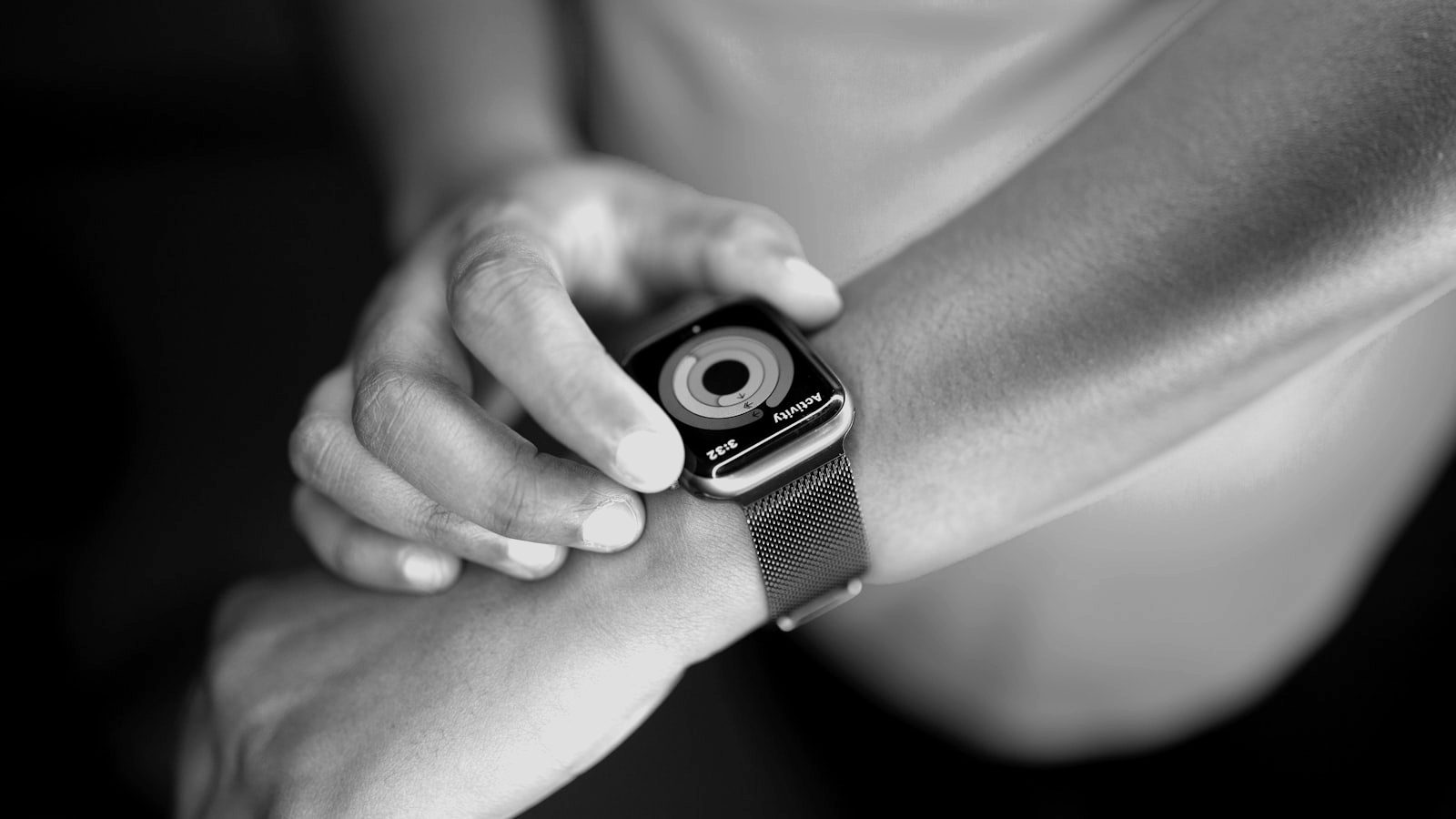
Partly. The Apple Watch tracks heart rate, calories, and motion well enough to recognize that you're lifting and to count many reps automatically (with an app). What it does not do natively is tell you anything useful about lifting effort: how close a set came to failure, or whether your reps slowed down. The watch sees movement and pulse. It doesn't see fatigue.
That matters because the most useful thing to measure in the gym isn't reps or heart rate. It's proximity to failure, how many reps you had left in the tank. More on why that's hard, and why your own guess is unreliable, in a minute.
The 4 winners at a glance
There are four different jobs people lump together under "apple watch strength training app," and the best pick changes completely depending on which one you mean. Most "best of" lists rank these apps against each other as if they're competing for the same crown. They aren't. A logging app and an effort app do different things. Pick by job.
| Job | Winner | Why it wins | Where it breaks | Runners-up |
|---|---|---|---|---|
| Best logger | StrengthLog | Dedicated, free, ad-free Apple Watch app since early 2025; barbell-focused; genuinely good graphs; accurate because you are the sensor | Won't count a single rep for you | Hevy, Strong, Jefit |
| Best auto rep counter | Motra (formerly Train Fitness) | Names the exercise and counts the reps from wrist motion, across 470+ exercises | Rated 3 out of 5 in 2026 hands-on testing: cables, complex movements and unusual wrist positions confuse it, and the corrections pile up | Gymatic, Rep Up (rep speed, rest timing, total weight moved) |
| Best for effort | Riven | Scores each set the moment you rack it and shows you which set was the real one; no extra hardware | Not a logbook, and it won't quote a bar speed in m/s | Almost nothing else shipping does this job |
| Best free | StrengthLog | Free and ad-free on the watch, and already the best logger, so going free costs you nothing on that job | Manual entry only | Riven (free to download) |
Best logger: StrengthLog
The logging apps (Hevy, Strong, StrengthLog, Jefit) all do the same basic job: you type the set, the app stores and graphs it. They're accurate because you are the sensor. For pure logging, StrengthLog is my default recommendation. It launched a dedicated, mostly-free, ad-free Apple Watch app in early 2025, it's barbell-focused, and its graphing is genuinely good. It won't count a single rep for you. That's fine: manual logging is still the most reliable ledger of what you actually did.
If you're already on Hevy and wondering what else is out there, the Hevy alternatives comparison covers the other loggers on what they measure on the watch, and the best way to track gym workouts settles paper vs app vs automatic watch tracking.
Best auto rep counter: Motra (formerly Train Fitness)
Motra is the most ambitious app in the category: strap on the watch, start lifting, and it names the exercise and counts your reps, using what the company calls Neural Kinetic Profiling, built on Harvard and University of Toronto research, to auto-detect 470+ exercises from wrist motion (it wants a minimum of about 3 reps per exercise and uses a detection threshold of 3 for best accuracy). Independent hands-on testing in 2026 rated it 3 out of 5, because auto-detection gets confused by cable exercises, complex movements and unusual wrist positions, and the corrections pile up enough that it can feel slower than just logging by hand, which matches my experience: free-weight barbell and dumbbell work mostly good, cable crossovers, machines and anything with a weird wrist orientation a coin flip. The app-by-app detail is in the full breakdown of the auto rep counter apps, and if Motra's corrections wear you down, the Motra alternatives post compares every wrist-based rep counter on Apple Watch in one table.
Gymatic and Rep Up play in the same space: they auto-identify exercises, count reps, and surface things like speed of reps, time between reps and sets, total weight moved, and work-versus-rest time, which is useful for understanding your pacing and rest discipline. But notice what's being measured: range of motion and timeline data, not progressive overload. They tell you how fast and how long, not whether you're getting stronger week to week, and not how hard each set actually was.
Here's the honest framing for the whole category: auto rep counters are a convenience, not a trustworthy performance ledger yet. The dream is no phone, no tapping, just train; the reality in 2026 is "promising, but keep your thumb ready to correct it." They're great for getting motion data without fiddling with your phone. They are not accurate enough that I'd trust them as the sole record of a serious training block.
Best for effort: Riven
Count the reps all you want. None of the apps above answer the only question that actually drives muscle growth: how close to failure was that set? And that's the question lifters are worst at answering themselves. Here is why effort, meaning proximity to failure, is the signal that matters, why your gut is a bad sensor for it, and what the one app in this category does about it.
You don't need literal failure, but you do need high effort
There's a popular gym belief that you must grind every set to muscle failure to grow. The research says otherwise (training to failure for hypertrophy: what the reviews say). A 2023 meta-analysis in Sports Medicine by Refalo and colleagues pooled 15 studies and found that training to set failure gave only a trivial hypertrophy advantage over stopping short: effect size 0.19, and when restricted to true momentary muscular failure, non-significant at 0.12. Translation: stopping 1 to 3 reps shy of failure grows nearly as much muscle, with far less fatigue.
The same review looked at velocity loss, how much your rep speed drops within a set, as a fatigue marker. Pushing past roughly 20-25% velocity loss added almost nothing (high vs moderate effect size 0.08). Pareja-Blanco et al.'s 8-week squat trial backs this up: a 20% velocity-loss cutoff produced comparable or better strength than a 40% cutoff (1RM +18.0% vs +13.4%) despite about 40% fewer total reps, muscle fibre growth was statistically identical between the groups, and only the 40% group lost type IIX (explosive) fibres, 7.8% down to 3.8%. A follow-up by Walker and colleagues measured what that costs acutely: blood lactate around 8 mmol/L in the 40% groups versus 3-5 in the 20% groups.
So the goal isn't "fail every set." It's "get close, last 1 to 3 reps in reserve, without burying yourself." Which means you need to know how close you got.
Your own estimate is unreliable, especially early in a set
This is the part that surprises people. Humans are bad at judging how many reps they have left. Research on predicting reps to failure found systematic under-prediction, with a standard error of measurement between 2.64 and 3.38 reps depending on the exercise, most accurate on elbow flexion, worst on leg press. Novices were off by 4 to 5 reps. Even lifters with 3+ years of experience missed by 1 to 2.
RIR estimates in lifting get reasonably accurate within 0 to 3 reps of failure, then fall apart further out. So your internal gauge is weakest exactly where it would help most, early and mid-set, and for exactly the people who most need it: beginners.
That's the gap. The valuable measurement isn't "did you fail." It's "how close were you," the one signal apps don't surface and humans estimate worst.
Velocity loss is the best objective proxy, with caveats
The most validated objective fatigue signal is velocity loss: as a muscle fatigues, the bar (and your reps) physically slow down. The honest caveat: it was validated with sensors on the barbell. A bar-mounted IMU nails squat mean concentric velocity (validity ICC 0.94, mean difference 0.01 ± 0.04 m/s), but the same study found hip-thrust validity lower (ICC 0.85) and its between-day reliability collapsing to ICC 0.55, so the same lift measured a week apart isn't the same measurement. Displacement is worse still: limits of agreement ran 7.8-10.7 cm even for a rigidly bar-mounted sensor, because getting position out of an IMU means integrating acceleration twice and the error compounds.
A wrist sensor is measurably noisier than a bar-mounted one, though by less than you'd guess. Achermann et al. 2023 tested an Apple Watch on free-weight back squats against optical motion capture: barbell-mounted r 0.971-0.979 (SEE 0.049 m/s), wrist-worn r 0.952-0.965 (SEE 0.064 m/s), roughly 30% more measurement error at the wrist, with systematic bias appearing on some lifts. So anything claiming lab-grade m/s from your wrist is overselling. The right framing is a relative effort trend, which is what fatigue actually shows up in: the shape of the decline across a set, not an absolute speed needing three decimal places. That is the lane the winner in this category sits in.
Riven is the Apple Watch app that scores muscle failure. It reads your wrist motion and stays quiet during the set; about three seconds after you rack the weight you get the exercise, the rep count and a 0-100 score. Reps slow down as a muscle nears failure, and that is what the score is built on. No barbell clip, no camera, no extra hardware. It shows you which set was the real one.
No wrist app will hand you a lab-grade bar speed, and you don't need one: the point is an objective read of the set exactly where your own guess is least reliable. The evidence for reading rep slowdown from the wrist, and where it stops, is in can the Apple Watch detect muscle failure?
Heart rate can't do this job either. In resistance training it's a weak proxy for lifting effort, and it can run lower on heavier sets than on lighter ones, so it's context, never a standalone effort signal. Any app headlining "effort" from heart-rate zones is selling cardio logic for a strength problem; the Apple Watch vs WHOOP for lifting comparison goes through what each of those two actually measures on a lifting day.
Why isn't there a cleaner solution? Because the cleaner one died commercially. Athos EMG smart clothing, the closest thing to consumer muscle-activation feedback, discontinued its consumer cloud in 2022 and pivoted to B2B. Medical EMG (Delsys, Noraxon) is gel-prep lab equipment. That vacuum is what wrist-based effort scoring is trying to fill with hardware you already own, and the honest pitch is exactly that: better than your guess, no extra gear, not EMG.
Best free: StrengthLog
If you refuse to pay for anything, StrengthLog wins twice. Its dedicated Apple Watch app is free and ad-free, and it's already the best logger on this list, so "free" costs you nothing on the logging job: the same barbell-focused logging, the same graphs, the same accuracy, because you're still the one entering the set. The effort pick is free to download as well, so going free doesn't force you to choose between keeping a log and knowing how hard the set was.
What free won't buy you in 2026, at any price, is hands-off rep counting you can trust. The best counter in the category still needs your thumb ready, and no auto rep counter is accurate enough yet to be the sole record of a serious training block.
Which app should you pick?
If I had to give one piece of coaching advice: log your lifts in something accurate (StrengthLog or Hevy), and if you struggle to gauge effort, which most lifters do, add the effort pick so you stop ending sets on feel and boredom. The two jobs are complementary, not competing. Auto rep counting is a nice-to-have on top of both; treat its numbers as a draft you check, not a record you trust. And if you only want to watch one number across a training block, make it how close each set got to failure, because that's the one your own estimate gets wrong and the one that decides whether the set built anything.
FAQ
Can the Apple Watch track strength training well?
It tracks heart rate, calories, and basic motion well, and several apps auto-count reps from wrist motion. It does not natively measure lifting effort or proximity to failure; that needs a dedicated app.
Which Apple Watch strength training app is best for auto rep counting?
Motra (formerly Train Fitness). It auto-detects 470+ exercises from wrist motion, but independent hands-on testing in 2026 rated it 3 out of 5 because cable exercises, complex movements and unusual wrist positions trip it up, so keep your thumb ready to correct it.
Which Apple Watch strength training app is free?
StrengthLog. Its dedicated Apple Watch app launched in early 2025 free and ad-free, and it's also the best manual logger on this list, so you give up nothing by going free.
Do I need to train to muscle failure to build muscle?
No. The meta-analytic advantage of failure over stopping 1 to 3 reps short is trivial-to-zero (effect size 0.12-0.19). Train with high effort, not necessarily to literal failure.
Can an Apple Watch measure barbell velocity from my wrist?
Not at lab grade. IMU velocity is validated mainly for select barbell lifts with the sensor on the bar. Measured against optical motion capture on the back squat, a wrist-worn Apple Watch carries roughly 30% more error than the same watch mounted on the barbell (SEE 0.064 vs 0.049 m/s), close enough for a relative effort trend, not for an absolute m/s number.
Is heart rate a good measure of lifting effort?
No. In resistance training, heart rate can run lower on heavier sets than lighter ones. It's a contextual signal at best, never a standalone effort gauge.
Which app actually measures effort or muscle failure in the gym?
Among shipping consumer apps, one: Riven is the Apple Watch app that scores muscle failure; it scores each set the moment you rack it, with no extra hardware.
Sources
- Refalo et al., Influence of Resistance Training Proximity-to-Failure on Skeletal Muscle Hypertrophy: A Systematic Review with Meta-analysis, Sports Medicine — https://pmc.ncbi.nlm.nih.gov/articles/PMC9935748/
- Ability to predict repetitions to momentary failure is not perfectly accurate, PMC5712461 — https://pmc.ncbi.nlm.nih.gov/articles/PMC5712461/
- Held et al., Valid and Reliable Barbell Velocity Estimation Using an Inertial Measurement Unit, IJERPH — https://pmc.ncbi.nlm.nih.gov/articles/PMC8431394/
- Pareja-Blanco et al., Effects of velocity loss during resistance training on athletic performance, strength gains and muscle adaptations, Scand J Med Sci Sports — https://pubmed.ncbi.nlm.nih.gov/27038416/
- Walker et al., Acute neuromuscular and hormonal responses to 20 versus 40% velocity loss, Experimental Physiology — https://pmc.ncbi.nlm.nih.gov/articles/PMC9542169/
- Achermann et al., Velocity-Based Strength Training: The Validity and Personal Monitoring of Barbell Velocity with the Apple Watch, Sports (Basel) — https://pmc.ncbi.nlm.nih.gov/articles/PMC10383699/
- findyouredge.app — Best Strength Training Apps for Apple Watch in 2026 — https://www.findyouredge.app/news/best-strength-training-apps-apple-watch-2026
- Motra (formerly Train Fitness) — https://trainfitness.ai/
- StrengthLog — The Best Gym App for Apple Watch Is Here — https://www.strengthlog.com/the-best-gym-app-for-apple-watch-is-here/
- Smart Clothing Lab — Athos Apparel — https://smartclothinglab.com/brands/athos-apparel/